Category: HSE

When Routine Maintenance Becomes a Critical Risk: What Leaders Miss Before Work Starts
When Routine Maintenance Becomes a Critical Risk: What Leaders Miss Before Work Starts A leaking gasket can look like a straightforward repair. The risk changes when a team has to open pipework, rely on an isolation and work from a position the original plan did not account for. A recent UK Health and Safety Executive…
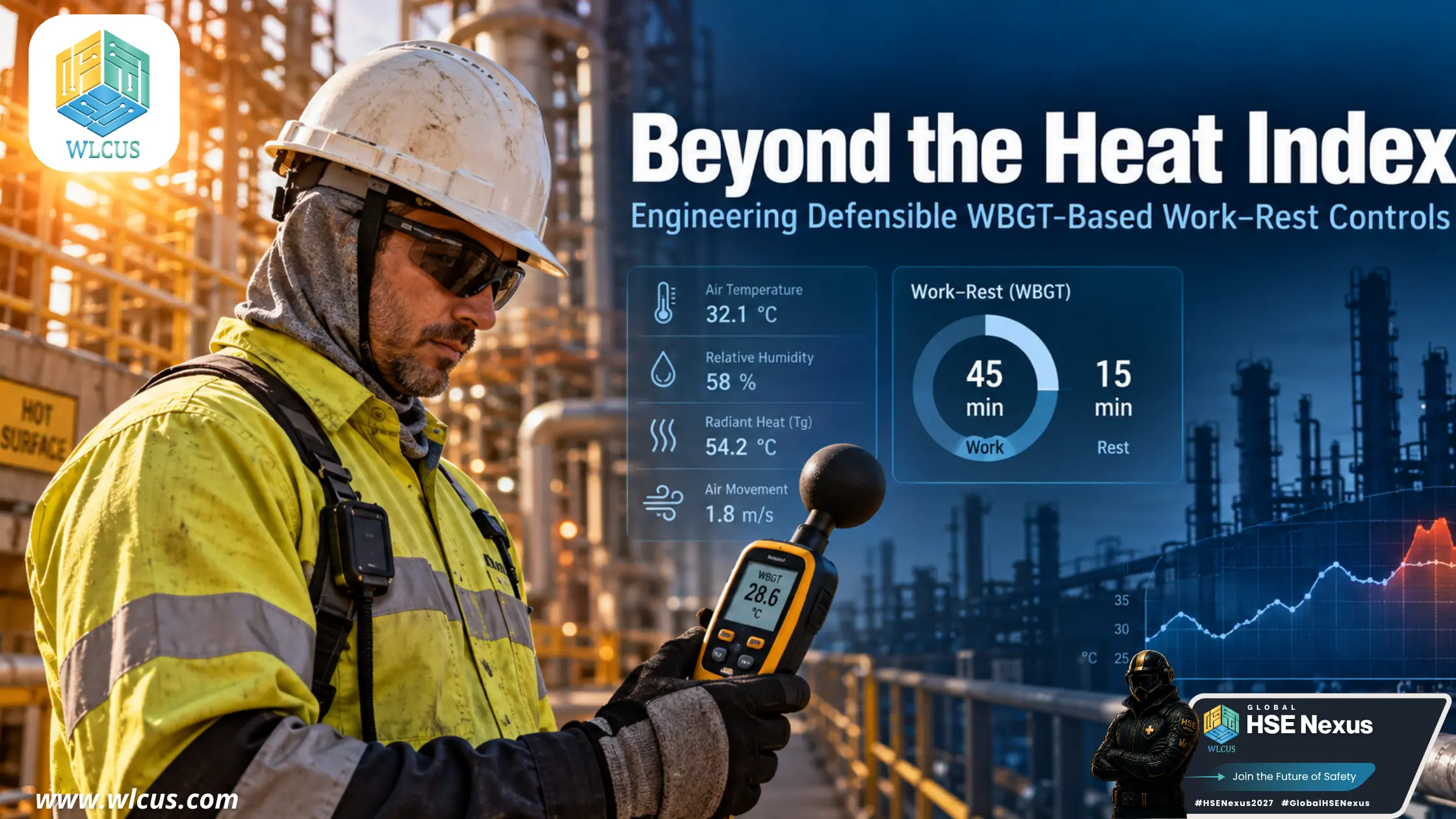
Beyond the Heat Index: Engineering Defensible WBGT Based Work Rest Controls
Beyond the Heat Index: Engineering Defensible WBGT-Based Work–Rest Controls Occupational heat stress is often managed as though it were simply a weather problem: check the forecast, distribute water and tell workers to take more breaks when conditions feel hot. That approach is inadequate for high-risk operations. A worker’s thermal burden is not determined by air…
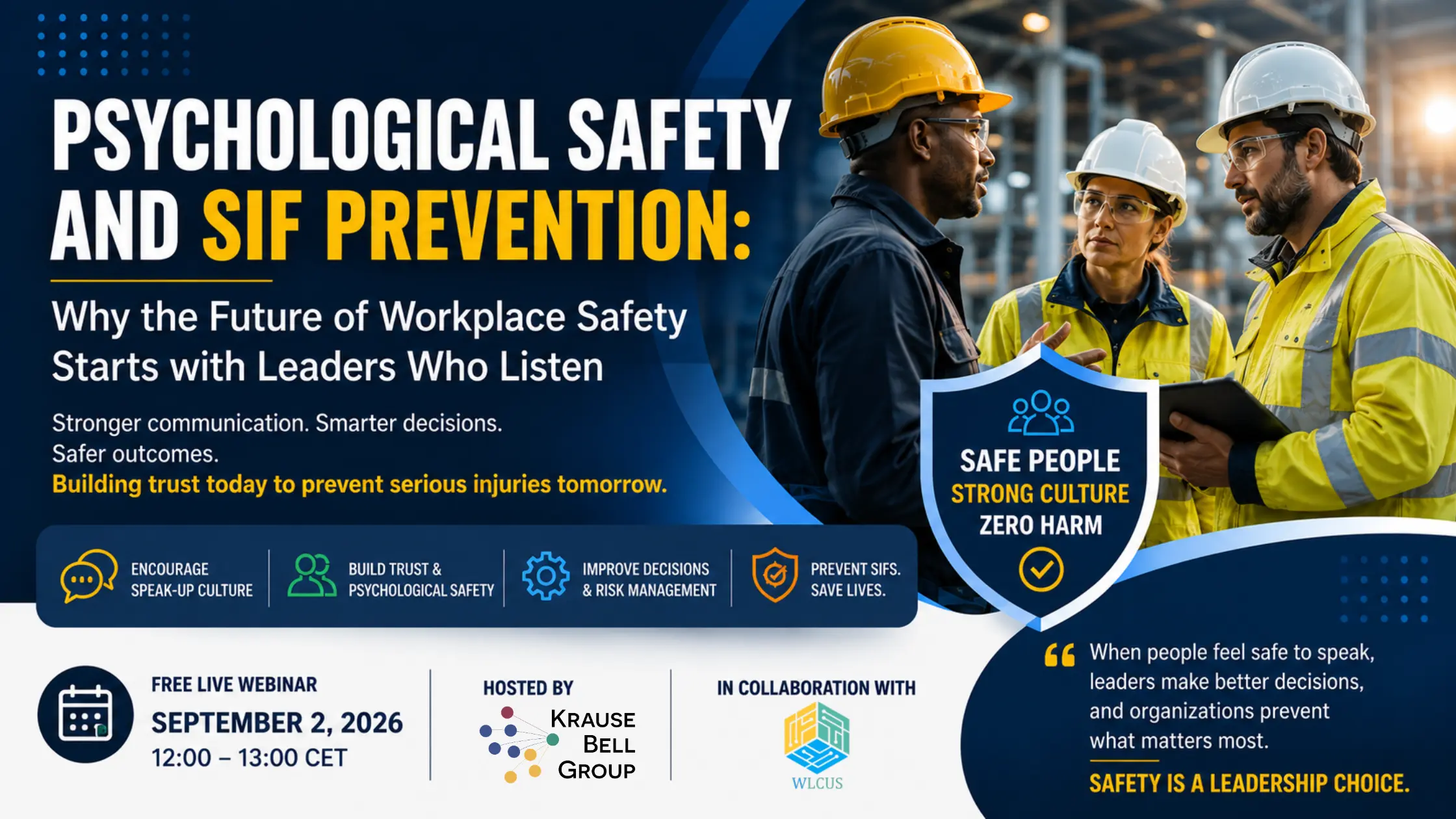
Psychological Safety and SIF Prevention: Why Safety Culture Starts with Leadership
Psychological Safety and SIF Prevention: Why the Future of Workplace Safety Starts with Leaders Who Listen By WLCUS in Collaboration with Krause Bell Group Introduction Every year, organizations invest millions in safety management systems, risk assessments, training programs, and compliance initiatives. Yet despite these efforts, serious workplace injuries and fatalities continue to occur across industries…
The 2026 Safety Paradox: Digital Transformation vs. Human Error
The 2026 Safety Paradox: Why Digital Transformation is Creating a New Breed of Human Error(And How to Bridge the Gap) The Invisible Risk in the Visible Factory As we approach the mid-way point of the decade, heavy industries, from Rail and Energy to Mining and Chemicals, are celebrating a milestone, the “Visible Factory”. We have…
The Industrial Case for Psychological Safety in 2026
The Fatal Silence: Why Psychological Safety is the 2026 Metric for Industrial High-Reliability The Plateau of Physical Safety In the traditional industrial landscape, risk management was a binary science of physical barriers, mechanical fail-safes, and PPE. However, as we approach the 2026 operational cycle, high-risk industries, from Deep-Sea Mining and Hydrogen Production to Automated Logistics,…
HRLF Scenario Replication in VR Safety Training
The Catastrophe Rehearsed:The Scientific Imperative for HRLF Scenario Replication in VR The Cost of the “Never” Event In high-risk industries from energy and construction to manufacturing and logistics, the greatest threat to human life and organizational continuity lies in the High-Risk, Low-Frequency (HRLF) event. These are the catastrophes that happen rarely, the major chemical spill,…
The New Blueprint for Safety: Redefining HSE Leadership in the AI Era
The New Blueprint for Safety:Top 6 Trends Redefining HSE Leadership in the AI Era The era of merely checking boxes and enforcing rules is over. Today, Health, Safety, and Environment (HSE) leadership is undergoing a radical, irreversible transformation. The role has moved from operational oversight to strategic business imperative. HSE leaders are now risk futurists,…
How Human-Centric Leadership and Inclusive Safety Systems Protect Neurodiversity
Beyond Compliance: How Human-Centric Leadership and Inclusive Safety Systems Protect Neurodiversity The pursuit of Zero Harm in high-risk industries, from construction and manufacturing to energy and chemicals, has long been defined by rigid standardization and adherence to the rulebook. However, the next leap in Occupational Health and Safety (OHS) is not a technological one, it…
Beyond Compliance: How AI is Revolutionizing Risk Prediction in High-Hazard Industry 4.0
Beyond Compliance: How AI is Revolutionizing Risk Prediction in High-Hazard Industry 4.0 For decades, the foundation of occupational safety and risk management in high-hazard sectors like petrochemicals, mining, and heavy manufacturing, Oil & Gas, Aviation, Aerospace, Construction etc has been built on compliance and reactivity. We comply with regulations, and we react to incidents. The…
The New Global Imperative: BS30480
The New Global Imperative:Why BS 30480 Must Redefine Workplace Health & Safety Introduction: The Overlooked Hazard For decades, the field of Occupational Health and Safety (OHS) has focused rightly so on managing physical hazards like falls, chemical exposure, and machinery operation. Yet, a silent, pervasive, and ultimately lethal hazard has often been relegated to a…